संमिलन सीमा अनुक्रम निम्नस्खलन और उपरस्खलन तीन प्रकार की संमिलन सीमाएँ इन्हें भी देखें सन्दर्भ दिक्चालन सूचीWhere and how do the continents deform?Himalayan tectonicsDynamic EarthEssentials of Physical GeologyUnderstanding Earth
प्लेट विवर्तनिकी
भूवैज्ञानिकप्लेट विवर्तनिकीपृथ्वीस्थलमण्डलभौगोलिक तख़्तेभूप्रावारज्वालामुखीभूकम्पन घटनाओंनिम्नस्खलननिम्नस्खलनभारतीय प्लेटयूरेशियाई प्लेटहिमालयतिब्बत के पठारमहासागरीय गर्तप्रशांत महासागरनाज़का प्लेटदक्षिण अमेरिकी प्लेटलावागैसऐन्डीज़ पर्वतमाला
भूवैज्ञानिक प्लेट विवर्तनिकी में संमिलन सीमा (convergent boundary) वह सीमा होती है जहाँ पृथ्वी के स्थलमण्डल (लिथोस्फ़ीयर) के दो भौगोलिक तख़्ते (प्लेटें) एक दूसरे की ओर आकर टकराते हैं या आपस में घिसते हैं। ऐसे क्षेत्रों में दबाव और रगड़ से भूप्रावार (मैन्टल) का पत्थर पिघलने लगता है और ज्वालामुखी तथा भूकम्पन घटनाओं में से एक या दोनों मौजूद रहते हैं। संमिलन सीमाओं पर या तो एक तख़्ते का छोर दूसरे तख़्ते के नीचे दबने लगता है (इसे निम्नस्खलन या सबडक्शन कहते हैं) या फिर महाद्वीपीय टकराव होता है।[1]
अनुक्रम
1 निम्नस्खलन और उपरस्खलन
2 तीन प्रकार की संमिलन सीमाएँ
3 इन्हें भी देखें
4 सन्दर्भ
निम्नस्खलन और उपरस्खलन
यदि संमिलन सीमा पर एक प्लेट दूसरे के नीचे खिसककर (स्खलित होकर) दबने लगे तो इस प्रक्रिया को निम्नस्खलन (सबडक्शन, subduction) कहते है और उस दबी हुई प्लेट को निम्नस्खलित प्लेट (subducted plate) कहते हैं। इस स्थिति में ऊपर चढ़ी हुई प्लेट को उपरस्खलित प्लेट (obducted plate) कहते हैं। एशिया में भारतीय प्लेट के यूरेशियाई प्लेट की संमिलन सीमा पर भारतीय प्लेट के निम्नस्खलन से ही हिमालय व तिब्बत के पठार की उच्चभूमि का निर्माण हुआ है।[2]
तीन प्रकार की संमिलन सीमाएँ
जब दो तख़्ते टकराते हैं, और यदी एक महासागरीय हो और दूसरा महाद्वीपीय हो, तो महाद्वीपीय तख़्ता आम तौर पर महासागरीय तख़्ते से कम घना होता है। इसलिये, सामान्यतः महासागरीय तख़्ता दूसरे तख़्ते के नीचे डूबता (दबता) है। ऐसी स्थितियों में एक ओर तो गहरा महासागरीय गर्त (ट्रेन्च) बन जाता है और दूसरी ओर एक पर्वतमाला बन जाती है। ठीक यही प्रशांत महासागर में महासागरीय नाज़का प्लेट के महाद्वीपीय दक्षिण अमेरिकी प्लेट के साथ बनी संमिलन सीमा पर हुआ है। अत्यंत दबाव के कारण यहाँ पत्थर पिघलकर लावा बन जाता है और भारी मात्रा में गैस भी बनती है। इस कारणवश इन पर्वतमालाओं के कुछ पर्वत विश्व के सबसे विस्फोटक ज्वालामुखिओं में गिने जा सकते है। दक्षिण अमेरिका की ऐन्डीज़ पर्वतमाला के सक्रीय ज्वालामुखी नाज़का व दक्षिण अमेरिकी तख़्तों में हो रही इसी आपसी प्रक्रिया का नतीजा हैं।[3]
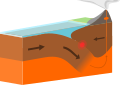
महासागरीय-महाद्वीपीय

महाद्वीपीय-महाद्वीपीय
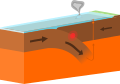
महासागरीय-महासागरीय



इन्हें भी देखें
- प्लेट विवर्तनिकी
- निम्नस्खलन
सन्दर्भ
↑ Butler, Rob (October 2001). Where and how do the continents deform?, Himalayan tectonics, Dynamic Earth. School of Earth Sciences, University of Leeds. Accessed 2008-01-29.
↑ "Essentials of Physical Geology," Reed Wicander, James S. Monroe; Cengage Learning, 2008, ISBN 9781133008729, ... The Himalayas began forming when India collided with Asia about 40 to 50 million years ago ... As the Indian plate moved northward, a subduction zone formed along the southern margin of Asia where oceanic lithosphere was consumed. Partial melting generated magma, which rose to form a volcanic arc ...
↑ "Understanding Earth," Frank Press (author), Macmillan, 2004, ISBN 9780716796176, ... The volcanoes of the Andes Mountains mark the convergence boundary where the oceanic Nazca Plate slides beneath the continental South American Plate. Farther north, the subduction of the small Juan de Fuca Plate under western North America gives rise to the volcanoes of the Cascade Range ...


